
Ask almost any parent when math started to feel hard for their child, and you’ll hear the same answer: “Everything was fine… until fractions.”
Fractions are often the moment when confident kids start to hesitate, get frustrated, or say, “I don’t get it.” But fractions aren’t the problem. They’re the moment the problem becomes visible.
Fractions Reveal What Kids Actually Understand
Up until fractions, many students can succeed in math by following steps.
They memorize addition facts. They learn standard algorithms. They practice procedures that feel predictable.
And for a while, that works. But fractions are different.
They require students to actually understand numbers: how they relate, how they scale, and what they represent.
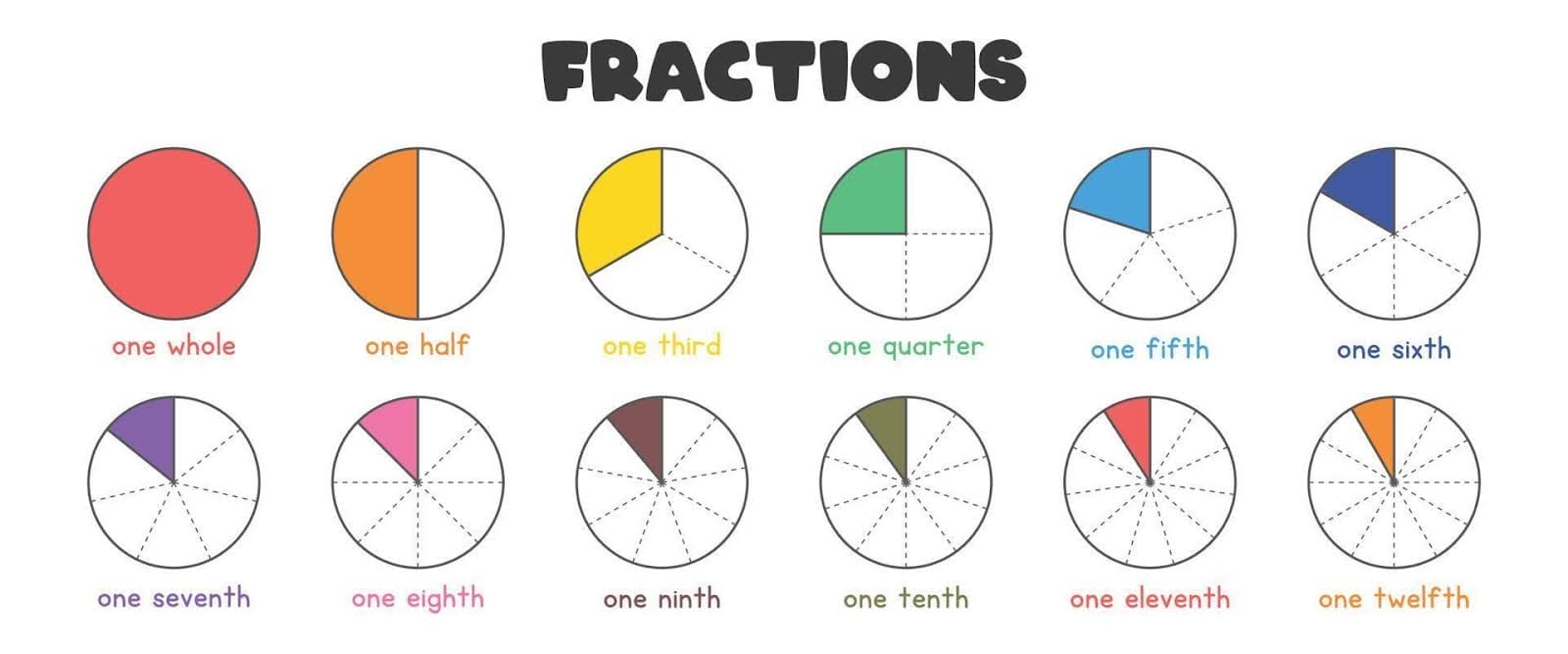
- What does 1/4 actually mean?
- Why is 1/3 bigger than 1/4?
- How can two fractions be equal?
These are not procedural questions. They are conceptual. If that foundation isn’t there, fractions quickly become confusing.
The Hidden Dependency: Multiplication and Number Sense
What looks like a “fractions problem” is often something else entirely.
Fractions rely heavily on:
- Multiplication fluency
- Division concepts
- Number sense (understanding magnitude and relationships)
If a child doesn’t fully understand multiplication, fraction operations feel arbitrary. If they don’t understand magnitude, comparing fractions becomes guesswork. So when a child struggles with fractions, it’s usually not new confusion. It’s old gaps, showing up in a new way.
Why Fractions Become a Breaking Point
Fractions are where memorization stops working. Students can’t rely on “just follow the steps” anymore, because:
- The steps are less intuitive
- The numbers behave differently
- And the “why” actually matters
This is often when students experience a shift: They go from feeling capable, to feeling unsure, to deciding they’re “not a math person.” Once that belief sets in, it changes how they show up in math.
They participate less. They take fewer risks. They disengage.
Why This Matters So Much for the Future
Fractions are not just another unit. They are a gateway.
A strong understanding of fractions is essential for:
- Ratios and proportions
- Percentages
- Algebra
- Advanced math and science
If fractions don’t make sense, everything that comes next becomes harder. This is why so many students hit a wall in middle school math. Not because the math suddenly becomes impossible, but because the foundation was never solid.
What Most Schools Get Wrong
In many classrooms, fractions are taught quickly, with a focus on procedures:
“Find a common denominator.” “Flip and multiply.” “Cross-multiply.”
Students learn what to do, but not why it works. They can complete assignments. They can pass tests, but they don’t build true understanding. When the math becomes more complex, that lack of understanding catches up with them.
A Different Approach: How Kids Actually Learn Fractions
If fractions are the breaking point, they’re also an opportunity. When taught well, fractions can deepen a child’s understanding of math in a powerful way. At Wonder Math, we approach fractions differently:
- We build the concept before the procedure
Kids understand what fractions represent before learning how to manipulate them. - We connect fractions to visual models and real meaning
So they can see and reason not just memorize. - We strengthen the underlying skills (like multiplication and number sense)
Because fractions don’t exist in isolation. - We make learning engaging and intuitive
So kids stay curious instead of shutting down.
The result isn’t just better performance on fractions. It’s a stronger mathematical foundation overall.
What Parents Should Watch For
If your child is learning fractions, there are a few early signals to pay attention to:
- They can follow steps but can’t explain why
- They guess when comparing fractions
- They get stuck when problems look slightly different
- They’re starting to lose confidence in math
These are not small issues.
They are early indicators of deeper gaps.
The Bottom Line
Fractions aren’t where kids start to struggle. They’re where the struggle becomes impossible to ignore. The good news is that this moment is also a turning point because when kids shift to understanding fractions then they feel math makes sense. They develop a Growth Mindset towards really learning hard things, which brings back confidence and opens the path forward.